
-
GRI 2-6
Production, sales and major assets of the Segment
The Extruded Product Segment consists of 7 companies, including 5 foreign companies. The Segment avails of four modern production plants located in:
- Kęty, where the parent company of the Segment, i.e. Grupa KĘTY S.A., is registered, covering a press shop, a foundry, dies and tools production workshop, anodising plant, and advanced aluminium products plant;
- Tychy, where Aluform Sp. z o.o. is registered, covering a press shop;
- Slovenska Bistrica (Slovenia), where Aluminium Kety EMMI d.o.o. is registered, covering aluminium components production plant and anodising plant;
- Borodianka (Ukraine), where Alupol LLC is registered, covering a press shop.
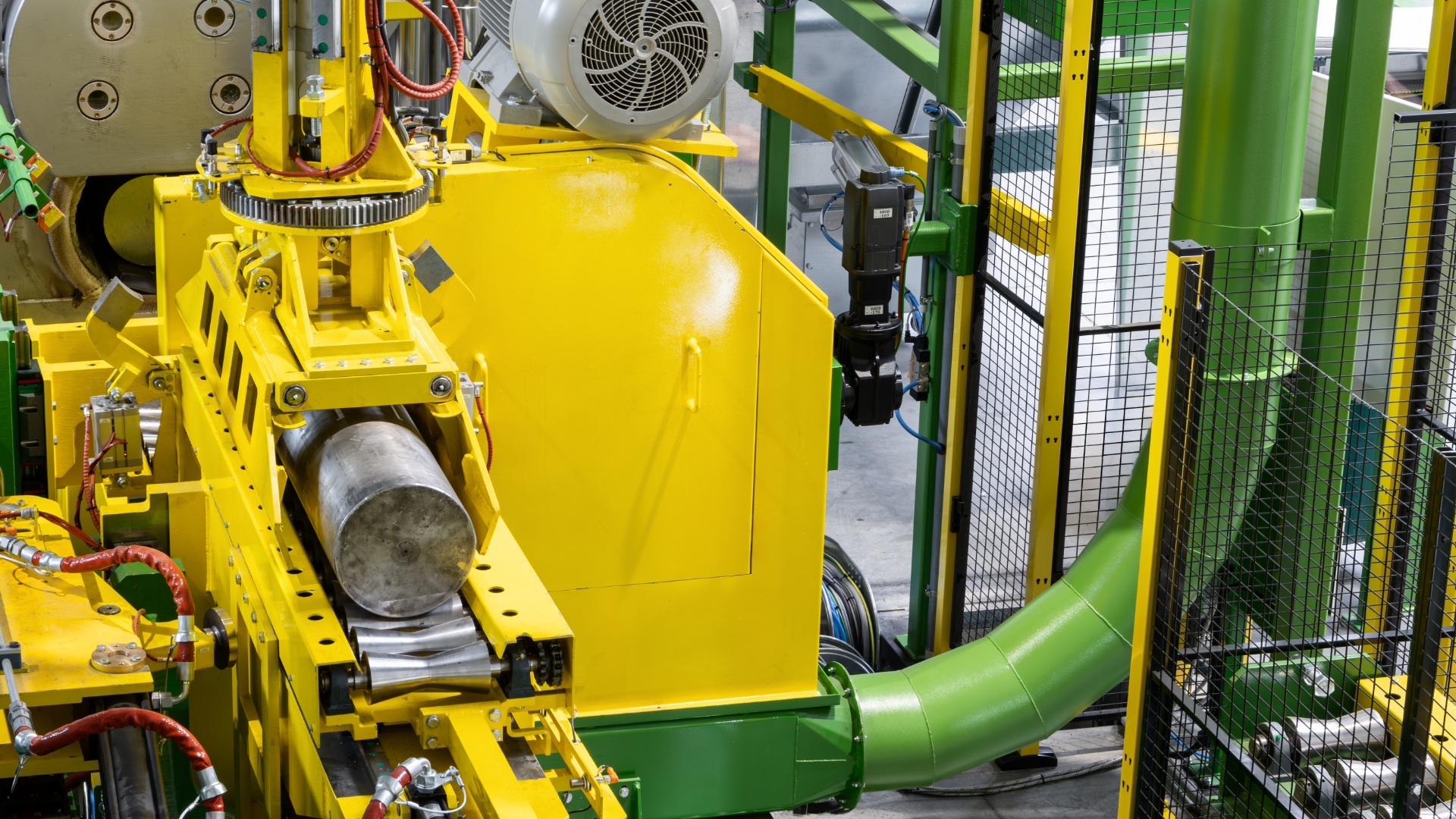
The plants possess the total of 14 modern presses of the capacity ranging from 1,200 to 4,400 tons, out of which 9 are used in manufacturing products from soft alloys, and 5 for products from hard alloys.
Adding to that the 40 MN press commissioned post the balance-sheet date, the Segment avails of 15 presses. The total production capacity of the EPS is now roughly 110,000 tons a year, and apart from the extrusion process which is the main activity of the Segment, comprises surface treatment (anodising), welding and prefabrication (cutting, drilling, CNC working).
The engineering facilities are supplemented with an in-house foundry, consisting of casting lines of the production capacity reaching 50,000 tons a year and adjusted to cast billets with various chemical compositions.
The Extruded Products Segment is not only the largest press shop in Poland but also an established European brand among the manufacturers of high-speciality aluminium products. It has been manufacturing precise components using varied technologies, in accordance with the individual preferences of our customers, frequently with deliveries directly to the assembly lines of our recipients.
Grupa KĘTY has the Advanced Aluminium Products Plant (ZZPA) within its structures. It is a special department responsible for comprehensive preparation of components and their implementation in serial production. The plant possesses facilities for working extruded products, for example CNC working (drilling, bevelling, threading), cutting, trimming, striking, bending, assembly and arc welding.
On the area of 7,000 m2 there are available dozens of machines and devices to manufacture components of extruded aluminium profiles. New lines and robots have been systematically installed in response to customer needs and engineering development.
100% of the Segment production is made for the specific orders of customers in many sectors, including: construction business, automotive and transport, railway, electrical engineering, defence, household equipment, advertising, and tourism industries. In the construction business, aluminium profiles are used for façades, windows and doors, roller-shutters and other shading products, as well as HVAC systems.
As regards structural applications, aluminium profiles are chosen for parts that contribute to mechanical resistance and stability of buildings, e.g. canopies of industrial halls, station halls and bus stops, sports halls, swimming pool roofs, river bridges, masts, lighting towers.
In power engineering aluminium profiles are used in the production of lamps, lighting poles, cable ducts, as well as solar panels and wind power plants.
The aluminium profiles manufactured by the Segment are also used in the production of parts for passenger cars, including electric cars, public transport means (buses, trains) and modern transport vehicles (semi-trailers, trailers and truck bodies).
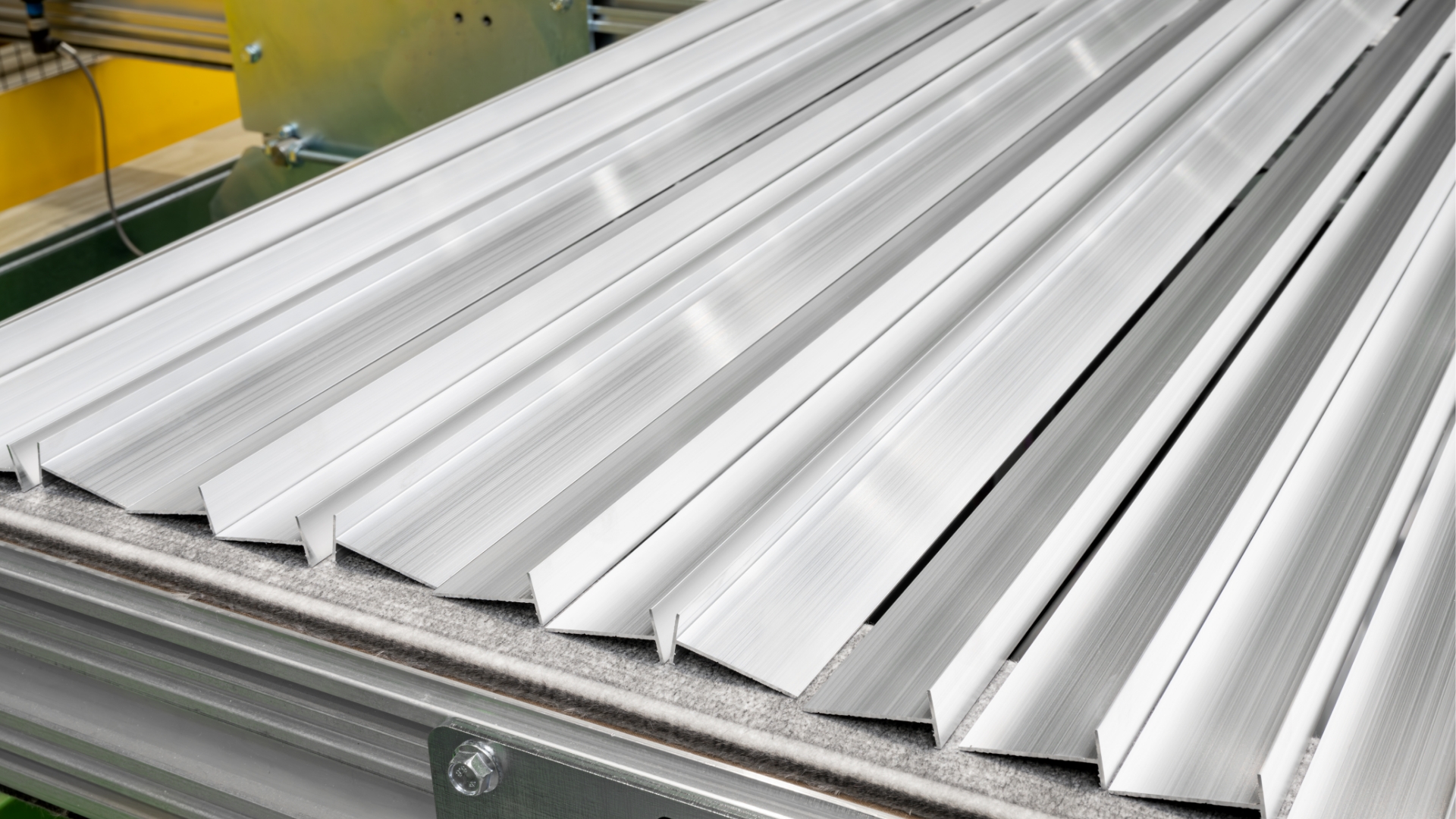
Products are sold both on the domestic market and abroad, mainly in Europe (for example in Germany, Austria, Czech Republic, Italy and the UK) and, to a lesser extent, outside Europe.
The Segment customers are served by the Domestic Sales Department and Exports Department of Grupa KĘTY S.A., Aluminium Kety EMMI d.o.o. and Alupol LLC, but also through three foreign sales offices located in Milan (Italy), where Grupa Kety Italia s.r.l. is registered, in Ostrava (Czech Republic), where Aluminium Kety CSE s.r.o. is registered, and in Dortmund (Germany), where Aluminium Kety Deutschland GmbH is registered.
The Segment has a diversified customers portfolio, with the largest one (consuming 20% of the production) being Aluprof S.A. (a subsidiary of Grupa KĘTY S.A.), which produces aluminium building systems (window and door, façade, and sun protection systems). Apart from the Aluminium Systems Segment, none of the customers of the EPS contributed to more than 10% consolidated sales of the Segment, and there is no other dependence on one or more customers.
The aluminium processing market in Poland and Europe is highly competitive, which may be partly due to the good prospects of the industry.
In Poland, there are 9 press shops with the total of 46 presses and estimated annual production capacity of 420,000 tons, which makes our country one of the leading producers of extruded products in Europe in terms of production capacity.
In 2023, the Segment possessed production capacity of 110,000 tons. Currently, the commissioning of a 40 MN press is pending completion, with the planned completion date in Q.2, 2024.
The production capacity of the EPS with regard to extrusion, put it on the first place among the domestic press shops and among ten largest profiles manufacturers in Europe. The estimated consumption of aluminium profiles in Europe in 2023 was approximately 3,100,000 tons, including 300,000 tons in Poland.
The main European competitors of EPS include international brands such as Hydro Aluminium, Constellium, Cortizo, Corialis, Exlabesa, HAI Aluminium, and Step-G, as well as domestic manufacturers such as Yawal, Eurometal, Extral, and Albatros. Recently, there has also been a noticeable expansion into the European market by players from other regions, in particular the Far and Middle East.
The companies compete with the European ones mainly by price, and supply relatively simple products, which do not require major processing or complicated logistics.
The basic materials used in aluminium profiles production include: raw aluminium, aluminium billets and alloying additives such as silicon, magnesium, manganese, copper, zinc, nickel and others.
Approximately 30‑35% demand for billets is covered by the in-house foundry production. The other part is purchased by the Segment from external suppliers, mainly in Europe. Alloying additives are also purchased from European suppliers.
The company pursues a responsible policy of diversifying its materials supply sources.The main raw material, the price of which influences the Segment operations and results, is aluminium.
In 2023, aluminium prices on the LME were relatively stable. Post the price increases in January from about USD 2,300/t to approximately USD 2,600/t there was a reversal of the trend and a gradual decline in price levels to roughly USD 2,100/t at the end of the first half of the year. In the second half of the year, prices fluctuated between USD 2,100 and 2,400 per ton, ending the year in the upper band of these fluctuations.
The billet premiums, understood as the cost of converting pure aluminium into billets used in the Segment’s production, dropped in 2023 from about USD 800/t in January to roughly USD 400/t in December, a level more than USD 1,200 lower than the historically record valuation in April 2022.
For the European manufacturers of extruded products, year 2023 was a challenging one. After a rather optimistic first three months, the following months brought a gradual decline in demand and orders due to the persistent excess inventory accumulated by customers in the preceding year.
However, a certain recovery noticeable at the end of the year and also reflected in industry reports allows for a more optimistic outlook for 2024, especially for its second half. Currently, the construction business (along with related industries, such as lighting, interior furnishings, and household appliances), being of key importance for the European profile manufacturers, continues to be stagnant, due to continued relatively weak demand.
In contrast, the automotive and engineering industries are improving, while the defence and aviation industries remain in the recovery phase. The construction business is also expected to see some improvement in 2024.
Taking appropriate measures in terms of sales policy, the consistent implementation of thoughtful investments combined with the development of new technologies have enabled the EPS to achieve solid operating results in the difficult conditions of 2023.
This was supported by effective management of the Segment resources, i.e. modern production lines, processing capacity, well prepared foreign sales structure, a broad range of products, and diversified customer portfolio.
Similarly as in the preceding years, the segment focused on further geographic diversification of sales while supporting the existing export markets by availing of the potential of foreign trading companies.
In the situation of weaker demand for extruded products in 2023 (building and joinery systems, furniture production, and tourism), a great advantage of the EPS proved to be the capacity to extrude profiles from hard alloys, for which the portfolio of orders from the metallurgy, machinery, shipbuilding and defence sectors customers was full throughout the year.
The production of hard alloy products is more demanding, and the products themselves have more specialized applications, which reduces competition in that area.
In Europe, only a few press shops have the capacity to manufacture such products. Despite the difficult economic environment and a significant decrease in the price of aluminium on the world’s markets compared with 2022, the Segment’s consolidated revenue reached PLN 2,108 million in 2023 and wes lower by roughly 15% y/y.
The share of the Segment’s foreign sales in 2023 remained at 52%, as in 2022.
The investment and sales activities of the Segment focus on products which require speciality equipment, expert know-how, and compliance with restrictive quality procedures.
Such assumed direction supports development and competitive advantage maintenance. A key role in the strategy is played by the in-house Research and Development Centre (CBR), employing professional staff and furnished with modern controls and instrumentation. The CBR is where hundreds of specialised tests are carried out every day to release products for delivery (chemical composition analysis, strength, metallographic and ultrasonic tests, spatial and electrical conductivity measurements).
The CBR also collaborates with respected research and development centres in Poland and provides a scientific base for innovative projects carried out by the Segment. In this way, the Segment is steadily expanding its product range, particularly with products used in prestigious high-tech industries.
In 2023, the CBR carried out work to support organic growth and efficiency of the Segment production departments, including: development of production technology for rods used in the defence industry, development of technology enabling considerable reduction of thermal strips on the surface of profiles for the construction business, development of new alloys to meet specific requirements of the automotive customers.
In order to support and increase the sales of products, the Segment has focused both on the improvement of assets effectiveness, including extended and optimised production capacity utilisation of the possessed machinery and equipment, and has carried out ambitious development projects.
Since the beginning of 2023, the Segment concentrated on the performance of major investment projects of the 2021-2025 Strategy, i.e. building a new hall and commissioning of two extrusion lines with 20 MN and 40 MN presses, which shall contribute to production capacity extension. In March 2023, the EPS commissioned the first of the two lines in Kęty (14th extrusion line of 20 MN) and extruded the first billet. Currently, the line operates on three-shift basis.
In August, the first elements of the second press of 40 MN arrived, and the whole delivery was complete in December. The press elements were assembled, implementation tests were completed and in Q.1, 2024 the first billet was extruded. Both new extrusion lines, installed in a hall of nearly 10,000 m2, were imported from Italy.
The new presses will be used specifically in the production of profiles for the automotive business (complex aluminium products of special mechanical properties intended for crumple zone control, and bodywork structures).
Proper configuration of the new presses (tooling and parameters setup) will also enable profiles extrusion for customers in other sectors, such as construction business or electrical engineering. The investment projects will enable the EPS sales plans performance in 2024 with the production capacity increased to roughly 115,000 tons.
Investments at the Advanced Aluminium Products Plant [ZZPA] have concentrated on the improvement of effectiveness and extension of the area of highly-processed products manufacturing.
The production capacity of the plant have been gradually increased by purchasing state-of-the-art equipment improving process effectiveness and enablin costs optimisation with maintenance of high product quality at the same time.
Further automation of operating workstations has also continued.